Meet Zoom AI Companion, your new AI assistant!
Boost productivity and team collaboration with Zoom AI Companion, available at no additional cost with eligible paid Zoom plans.
 14 min read
Updated on January 19, 2026
Published on January 19, 2026




Business-to-business (B2B) customer service is a high-stakes affair, but it can have huge payoffs. In a survey of 2,000 executives, Accenture found that viewing customer service in terms of its value rather than its cost could triple revenue growth.
But B2B customer service isn’t a one-size-fits-all solution — it’s a strategic partnership built on trust, expertise, and proactive problem-solving.
While business-to-consumer (B2C) interactions often focus on quick fixes (like refunding a defective product), B2B requires navigating complex situations involving multiple stakeholders, watershed decisions, and long-term goals.
Below, we share a complete plan for overhauling your B2B customer service strategy. You’ll gain practical insights into how to foster loyalty, reduce churn, and turn customers into advocates.
B2B customer service refers to the ongoing, relationship-focused support businesses provide their customers.
There are three key pillars that make B2B customer support stand out:
Think of B2B customer support as a concierge, where B2C is more similar to a cashier. A cashier is quick, efficient, and focused on getting things done fast, whereas a concierge is knowledgeable, personalized, and deeply invested in giving the guest the best experience possible.
The needs, expectations, and dynamics of B2B and B2C interactions are fundamentally different. Understanding these distinctions is key to building a scalable and effective B2B customer service framework.
With that in mind, here’s a quick overview of how B2B and B2C customer service are different:
| B2B customer service | B2C customer service | |
| Relationship | You build long-lasting partnerships across teams, departments, and sometimes entire organizations. Your reps might be on a first-name basis with a customer because they’ve worked together for years. | Interactions are often fleeting. A customer might love your product but rarely build a personal connection with the brand itself. |
| Customer value | Each B2B customer can represent a massive portion of your revenue. Losing them isn’t just a missed sale; it can be a serious strategic blow. | You’re playing the numbers game. You might lose hundreds of customers in a month and still grow. |
| Issue complexity | Highly complex, technical, multi-stakeholder issues, such as, “The entire sales team is locked out of the CRM” | Often simple, individual issues, such as “I need to reset my password” |
| Support style | Proactive and consultative; revolves around being a trusted advisor. Your team needs to understand your customer’s business goals, industry challenges, and tech stack so you can help them hit their KPIs. | Reactive and scripted, with a focus on speed and efficiency. Your purpose is to get the answer, close the loop, and move on. |
| Decision-making | Multiple stakeholders are involved — a single support ticket might involve IT, procurement, legal, and end users. | A single individual usually makes the call without the need for approvals, circumventing red tape, or carefully cultivating stakeholder alignment. |
When done correctly, B2B customer service flips from being a cost center to a revenue driver while unlocking many tangible benefits, such as:
| Find out how Iress is driving improvement and excellence in customer service with Zoom Contact Center. |
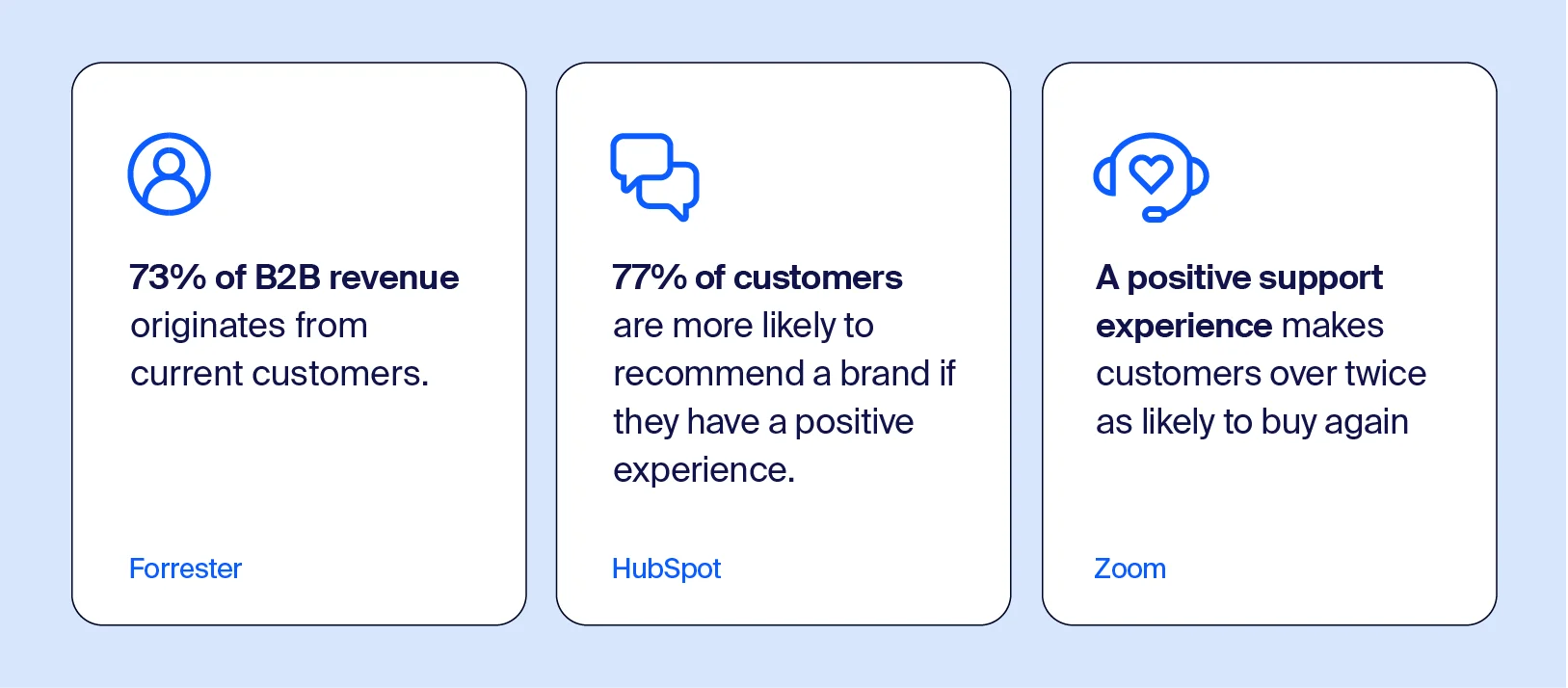
Creating a scalable B2B customer service framework starts with strategic planning and navigating each customer’s unique needs. The steps below walk you through how to lay the groundwork.
Go well beyond the narrow considerations of your own product. Research the customer’s industry, company goals, and key challenges. Create detailed customer profiles that map their workflows, pain points, and long-term objectives. Understanding their business inside and out allows you to provide the tailored solutions expected of B2B customer service, rather than generic fixes.
| Pro tip: Create an “Account Map” for each key customer. Identify your champion (your biggest advocate), the primary decision-maker, the end users, and potential blockers. Understanding internal politics and key players can help you navigate challenges and build stronger, more strategic relationships. |
Instead of reacting to problems as they arise, focus on proactive engagement. Schedule regular check-ins, conduct comprehensive quarterly business reviews, and share best practices, changing your focus from offering reactive support to fostering a partnership focused on growth.
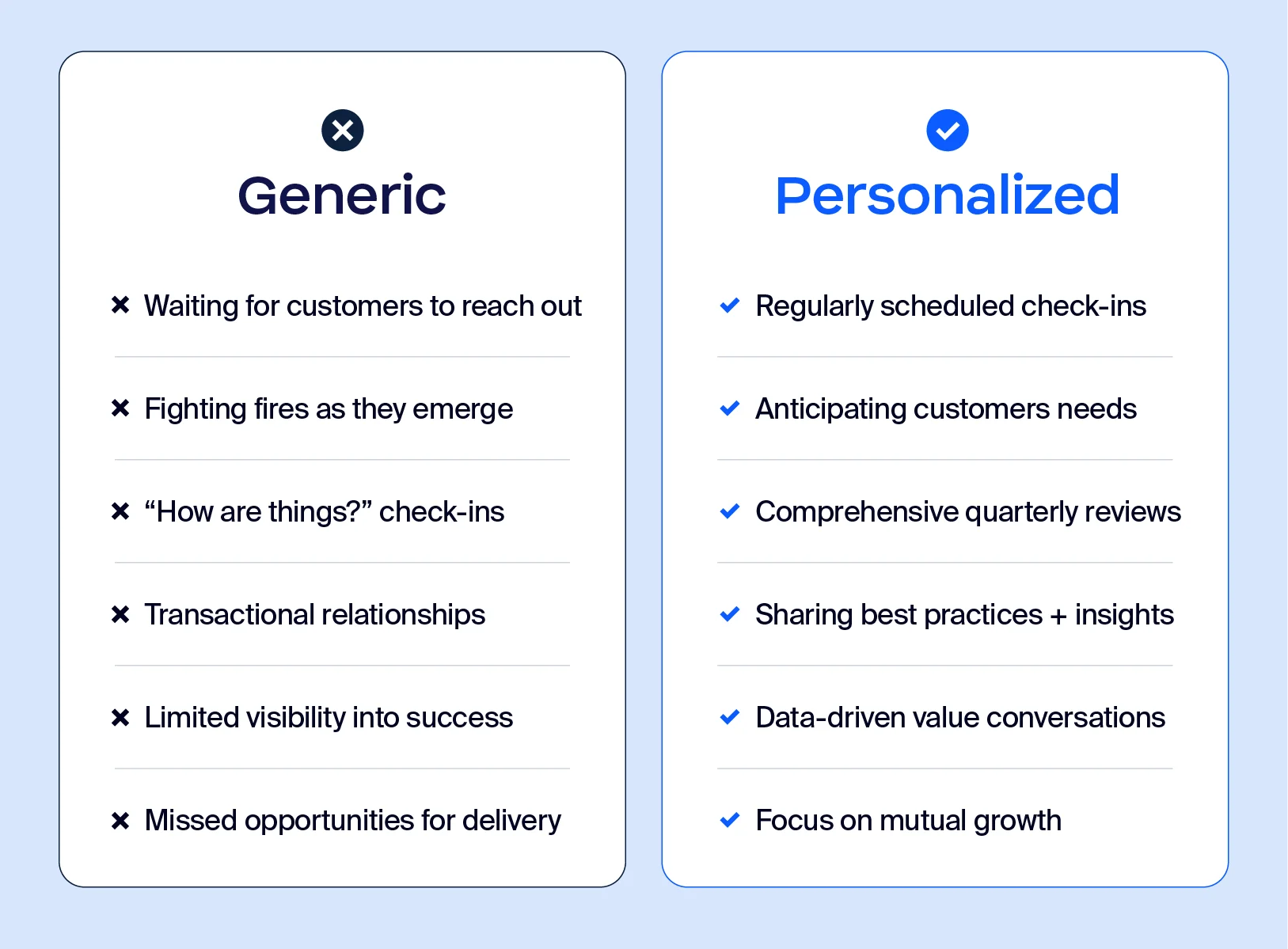
| Pro tip: Don’t just ask “How are things going?” in your check-ins. Be intentional with your time together and come prepared with data. Show them their usage trends, highlight underutilized features that could solve a problem they have, and benchmark their performance against anonymized industry averages to provide tangible, data-driven value. |
Use dedicated account managers or customer success managers as a single, trusted point of contact for high-value customers. Consistency fosters trust and encourages efficient issue resolution.
| Pro tip: Empower your account managers to be the internal “voice of the customer.” Create a formal process for them to share customer feedback directly with your product and engineering teams. This not only makes the customer feel heard but also provides an invaluable feedback loop for product improvement. |
Implement a robust CRM or help desk software to track every interaction and provide full context to your team. You can take this up a notch with Zoom CX, which leverages AI, virtual agents, and real-time analytics to empower your team to anticipate customer needs and resolve complex issues faster.
| Pro tip: Set up Zoom Virtual Agent with Zoom Revenue Accelerator to automatically flag every conversation with key customers. Then use Zoom Quality Management to review those calls and coach your agents on what really matters for B2B and elevate the service they provide. It’s a direct way to train your team on the skills that turn a support call into a loyal customer. |
Create clear, tiered SLAs that outline response times and resolution goals based on customer level and issue severity. In addition to building credibility, this transparency sets realistic expectations around how your B2B relationship will unfold.
| Pro tip: In your SLAs, prioritize quality of resolution over speed of first reply. While a quick initial response is good, B2B customers would often rather wait an extra hour for a correct, comprehensive answer from an expert than get a fast, generic reply that requires multiple follow-ups. Define metrics that track successful resolutions, not just speed. |
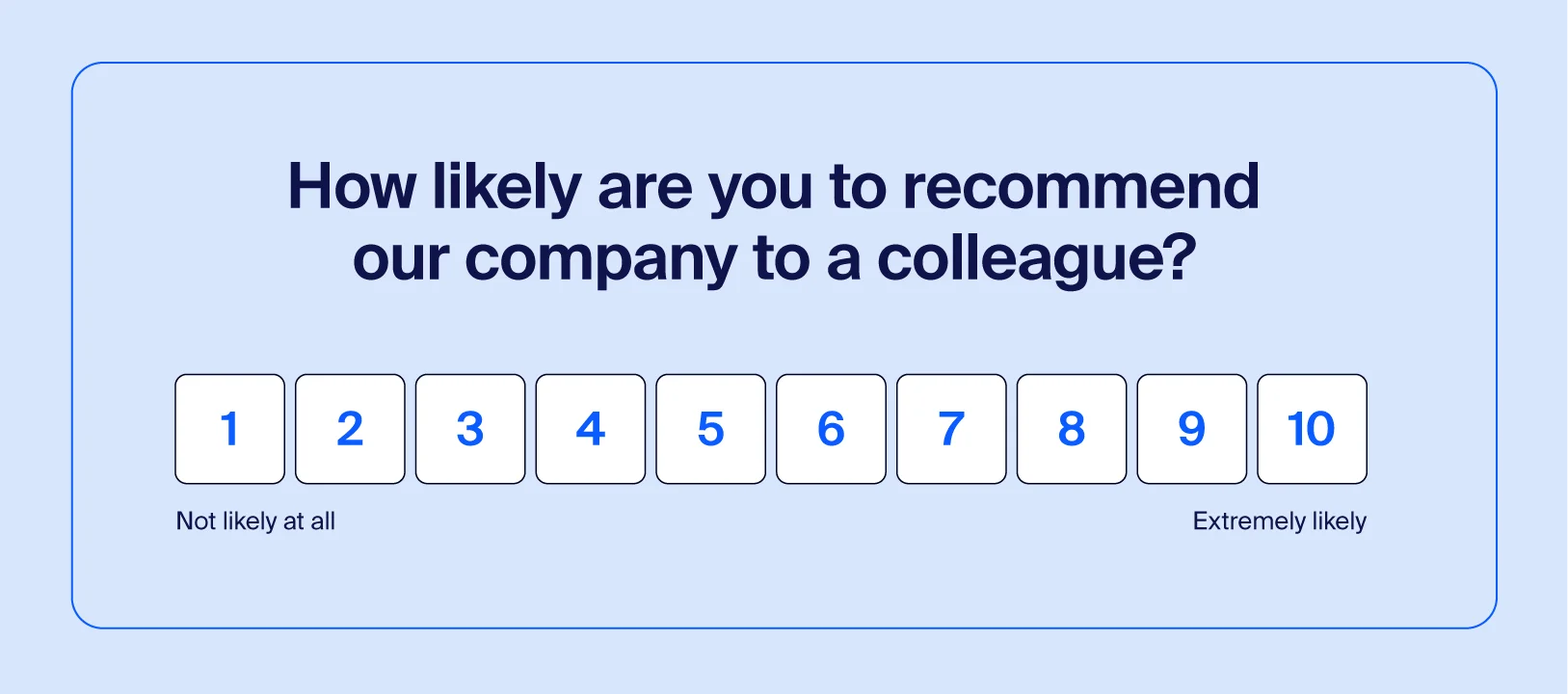
B2B customer service is fairly complicated, and assessing the success of your efforts can’t be done with a single isolated metric. What you need is a constellation of metrics that help you prioritize what truly matters: retention, loyalty, and mutual success.
The discussion so far has been focused largely on theoretical considerations. Here, we’ll put some flesh on these bones by looking at some outstanding B2B customer service examples.
Zoom is advancing the fastest-growing trends in customer service, offering a virtual agent that customers can use to resolve complex issues from end to end, on their own terms. Rather than spending hours on calls or lengthy email threads, customers can query Zoom Virtual Agent to receive fast, personalized answers in a friendly manner.
Zoom Virtual Agent has reinvented CX from the inside out, yielding a 28% increase in CSAT scores, a 35% reduction in unmatched queries, and a 97% success rate in solving customer inquiries through self-service. This approach turns complex, often frustrating problems into quick, useful, and delightful experiences for the customer and contributes to the broader use of artificial intelligence.
Salesforce’s customer success managers don’t solely focus on problem-solving. Their broader purpose is (as we’ve said all along) to act as strategic advisors by collaborating with customers to build custom reports and dashboards tailored to their unique business goals. By helping customers track tailored KPIs, Salesforce becomes a growth partner, with the added bonus of strengthening trust.
Caterpillar equips industrial machinery with Internet of Things (IoT) sensors that predict part failures before they occur. Armed with this data, they can proactively schedule maintenance and avoid costly downtime. This predictive strategy reduces disruptions, demonstrates reliability, and positions Caterpillar as a trusted guardian of customer operations.
Rackspace makes B2B support a cornerstone of their brand. Their “Fanatical Support” model embeds engineers directly into customers’ workflows where they act as an extension of their IT teams.
Whether troubleshooting cloud infrastructure or anticipating scaling needs, Rackspace takes radical ownership of issues, even if they originate outside its product. This approach has become a well-known competitive advantage, fostering customer loyalty that’s every bit as fanatical.
HubSpot treats education as a core service, not an afterthought. Through HubSpot Academy, they offer free, in-depth courses on marketing, sales, and service — empowering customers to succeed independently. By democratizing knowledge, HubSpot fosters self-sufficiency while deepening engagement. Their model proves that informed customers are more productive, loyal, and likely to advocate for the brand, creating a flywheel of mutual growth.
Each of these examples underscores a universal truth: Exceptional B2B customer service cannot be reactive. It relies on an approach that is strategic, personalized, and woven into the fabric of the customer relationship.
| See how Midwest Real Estate Data supports nearly 50,000 subscribers with exceptional customer service using Zoom solutions. |
Building a scalable B2B customer service framework hinges on adopting strategies that prioritize partnership, personalization, and forward-looking support. These best practices will help your team foster long-term loyalty and growth, rather than just solving one-off problems.
Shift from a transactional mindset to one focused on strategic problem-solving. Instead of merely closing tickets, dig into the “why” behind customer requests; if a customer asks about a feature, for example, explore how it aligns with their business goals.
By offering tailored advice (like suggesting workflows or integrations), your team will be seen as a nimble, responsive partner that’s simultaneously an essential part of their operations.
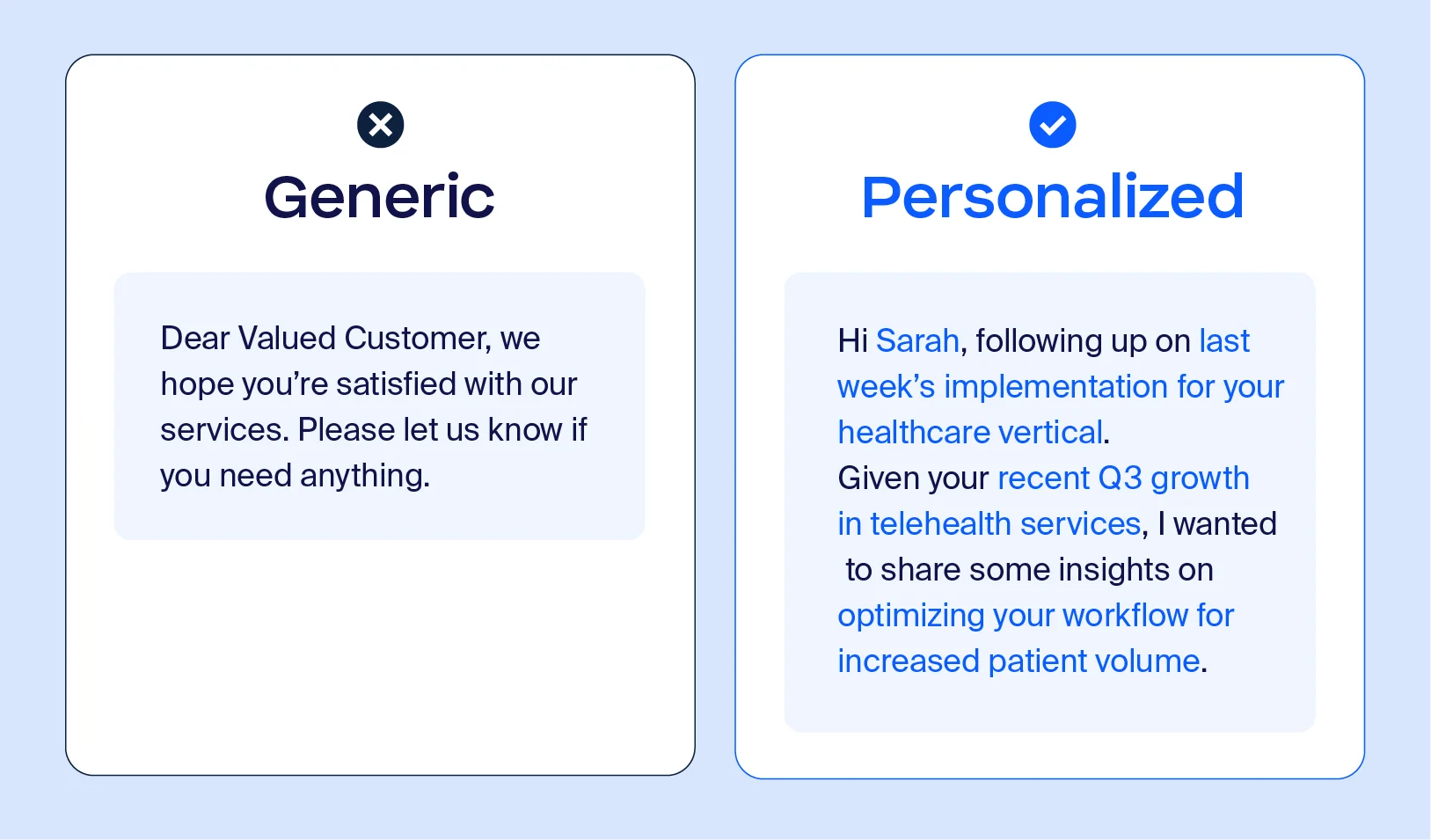
B2B customers expect individualized attention (and, at the prices they usually pay, it’s fair to say they deserve it). Use a system that integrates with a trusted CRM (like Zoom's integration with Salesforce) to track details like industry verticals, recent projects, and past interactions; this will allow you to do things like reference a customer’s expansion into a new market during a support call, signaling that you understand their unique journey.
This level of personalization transforms generic exchanges into meaningful dialogues and helps customers see that there’s a meaningful, mutually beneficial partnership being cultivated.
Give agents tools like real-time access to technical experts or the authority to approve credits so they have the autonomy to resolve issues without endless escalations. This works best when your contact center is built on a unified business communications platform that connects the entire organization.
For example, a Zoom account manager might instantly address a billing dispute rather than routing the customer through multiple departments. Teams that are empowered in this way can deliver faster resolutions, improving customer satisfaction and reducing frustration.
Predictable check-ins build trust. Schedule regular updates — weekly calls for high-touch customers, monthly summaries for mid-tier accounts, and quarterly business reviews for strategic partners. During these sessions, share progress against agreed-upon KPIs and flag potential risks. This cadence aids alignment and reduces customer anxiety about where they stand.
The first 90 days of working with a new customer are critical. It’s essential to go beyond the technical setup to create a joint success plan that outlines milestones, such as integrating key tools within two weeks. This helps set up a quick win — like launching a pilot program that demonstrates immediate ROI — to build momentum toward a productive partnership.
Turn feedback into action. Collect insights via surveys or direct conversations, then share anonymized results internally to drive improvements. Then, circle back to customers to explain how their input has shaped the changes.
For example, if a customer suggested a feature enhancement, notify them when it’s implemented. This transparency transforms customers from passive users into active contributors to your product roadmap.
Investing in B2B customer service directly impacts revenue through reduced churn, increased customer lifetime value, and stronger brand advocacy. Be sure to track metrics like Net Promoter Score, customer satisfaction scores, and churn rate to quantify any relevant improvements.
Both are critical, and neither can be ignored without unwelcome consequences. Technical expertise (such as the ability to write code) means agents can resolve complex issues efficiently, while soft skills (like empathy, active listening, and relationship-building) foster trust and loyalty.
B2B customers expect consultative support, not just transactional fixes. Agents who balance these traits can turn transactions into partnerships, driving repeat business and referrals.
Prioritize scalability without sacrificing personalization. The best way to do that is by adopting AI-first tools like Zoom Virtual Agent to automate routine tasks, freeing agents to focus on high-value issues. Implement proactive measures, such as predictive maintenance, to anticipate customer needs. And be sure to maintain consistency by centralizing workflows with a unified platform, establishing seamless collaboration across teams.
The best way is to approach challenges with empathy and transparency. Listen actively to understand root causes, validate their concerns, and collaborate on solutions. For example, Salesforce’s customer success teams engage customers in joint problem-solving, leveraging internal experts when needed.
Document interactions thoroughly to avoid recurring issues and follow up post-resolution to rebuild trust. Difficult customers often become advocates when handled with patience and accountability.