Meet Zoom AI Companion, your new AI assistant!
Boost productivity and team collaboration with Zoom AI Companion, available at no additional cost with eligible paid Zoom plans.
 10 min read
Updated on March 17, 2026
Published on March 17, 2026



With their rigid scripts and limited responses, old-fashioned, rules-based chatbots never really took off. Today’s AI-first chatbots are different. As we move into a new era of agentic AI, the humble chatbot is transforming into an intelligent AI agent that can reason, adapt, and solve complex challenges at speed.
Below, find 65+ recent chatbot statistics that suggest this is not a passing fad. See how chatbots are evolving into virtual AI agents and are already improving customer satisfaction scores, cutting queue times, and helping teams handle 10x more tickets without hiring more staff.
Chatbots, like Zoom Virtual Agent, now play a central role in customer service, with significant increases in usage by businesses and their clients. These standout AI chatbot statistics show how widespread the technology is becoming:
Different business analytics firms predict varying levels of growth in the chatbot market, but they all agree it’s expanding fast.
Here are the predictions from Mordor Intelligence, MarketsandMarkets, and The Business Research Company, covering the period until 2028. We’ve also averaged out each prediction to give you a clearer picture of where the market is heading.
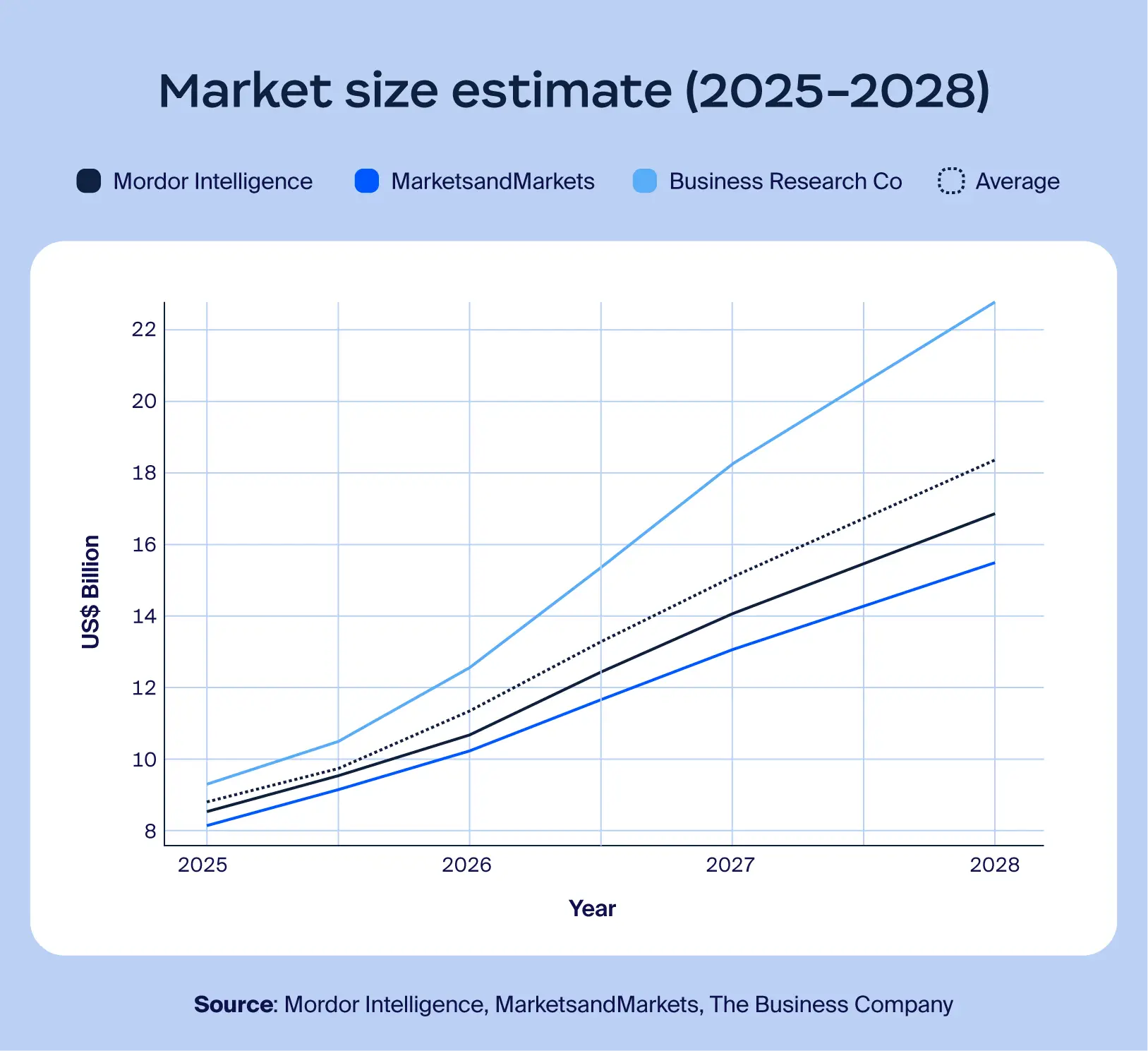
Chatbot market size forecasts by firm from 2025 to 2028
| Year | Mordor Intelligence (in billions) | MarketsandMarkets (in billions) | The Business Research Company (in billions) | Average (in billions |
| 2025 | $8.71 | $8.21 | $10.32 | $9.08 |
| 2026 | $10.83 | $10.12 | $13.41 | $11.46 |
| 2027 | $13.46 | $12.48 | $17.44 | $14.46 |
| 2028 | $16.74 | $15.39 | $22.67 | $18.27 |
While the analysts’ numbers differ slightly, each believes the chatbot market will nearly double in size between now and 2028.
The use of chatbots is spreading quickly among businesses looking for more effective ways to serve their customers. Among the many different types of companies using chatbots for customer service, sales, and support are:
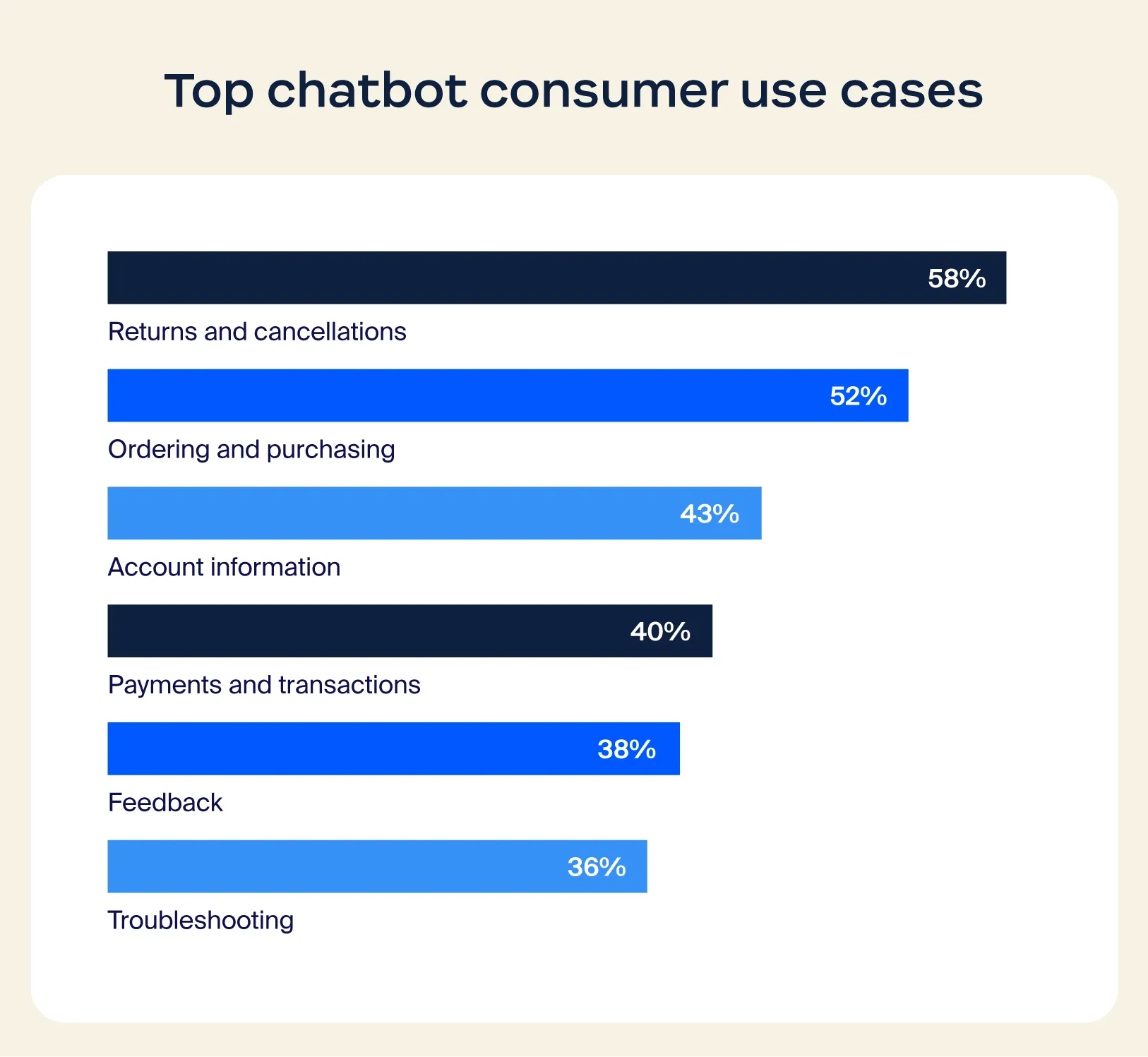
Chatbots have quickly become a routine part of how people shop, ask for help, and interact with businesses. Generative AI has transformed chatbots into tools capable of analyzing and resolving customer issues — like real virtual agents. These statistics suggest the frequency of usage and the purposes for which people use them.
Chatbots deliver real value to both companies and customers. With the right setup, today’s AI-first chatbots can resolve even complex issues on their own, reduce call queues, and provide key data to help improve customer support. Here’s what outcomes matter most to businesses and how those who have already invested in the technology are benefiting.
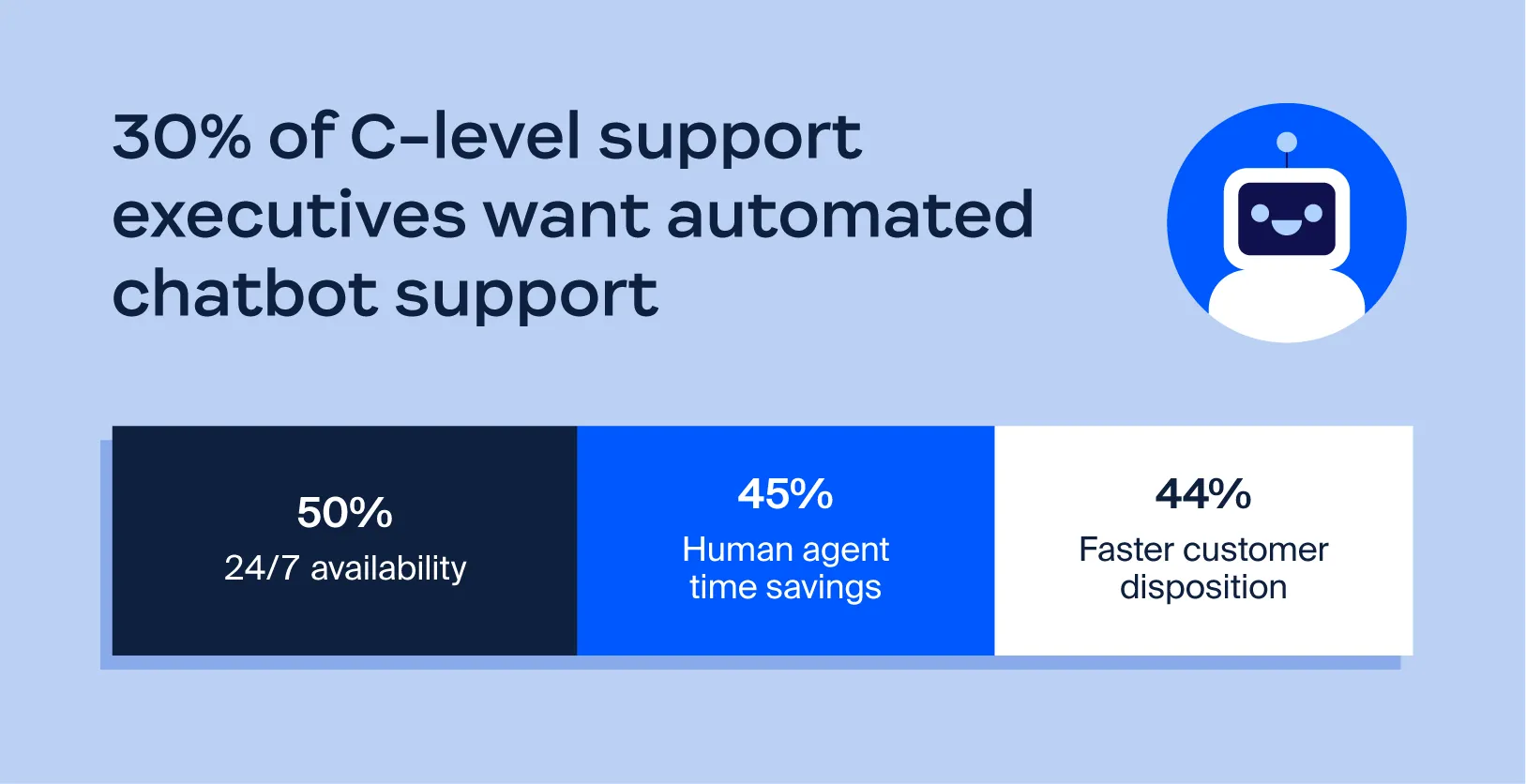
Support teams and C-suites are betting heavily on AI chatbots after seeing how much customers seem to trust them. Investment in AI chatbots is up, but other support and sales investments sometimes lag behind. These stats show where AI is having a positive impact and where gaps still exist.
Companies can significantly enhance the quality and speed of their omnichannel customer service by incorporating chatbots into their mix of live agents, phone support, SMS and WhatsApp messaging, and self-service options, such as knowledge bases.
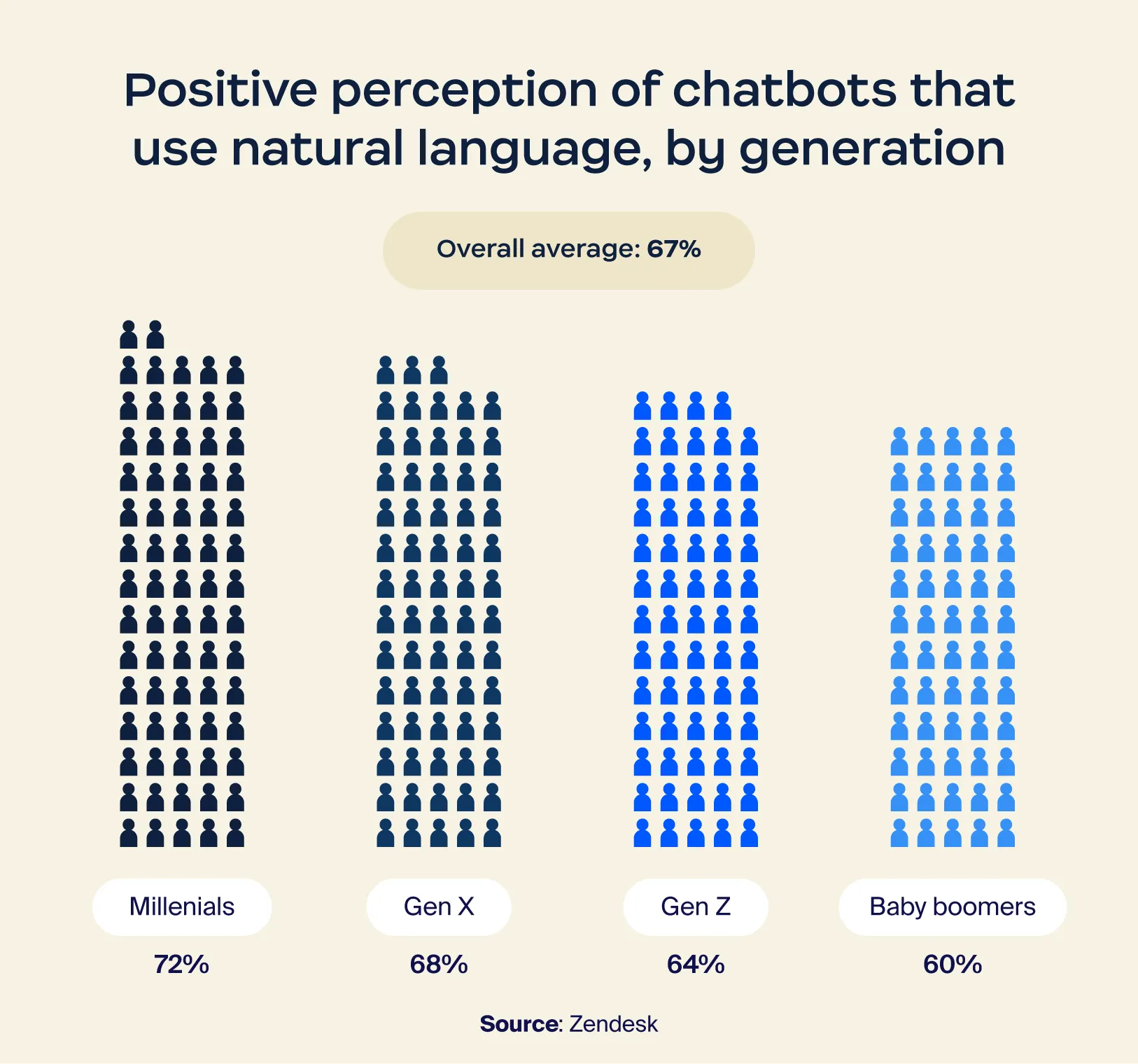
Customers love the speed and control of AI bots but still want the assurance of human backup. These statistics reveal what people expect from chatbots, what turns them off, and how chat affects their purchasing decisions.
Chatbot adoption statistics show that companies, consumers, and even business decision-makers buying for their company feel very positive about AI chatbots. Soon, it’s likely that making an AI chatbot available to customers will be considered a call center best practice.
Take Zoom for example. Since integrating the AI-first Zoom Virtual Agent into our service platform, we have seen these remarkable results:
The same technology is available to your business with Zoom CX, a modern contact center solution built for AI-first customer engagement.
Request a personalized demo to see Zoom Virtual Agent in action.
There are dozens of large language model-powered chatbots, including ChatGPT, Claude, Meta, Grok, and Mistral. Businesses use these models to power the chatbots on their websites, which handle customer questions, guide users through tasks, and reduce the need for live support.
There are no defined figures on exactly how many companies use chatbots. Tidio quotes 58% of B2B and 42% of B2C companies using chatbots, but other sources give different estimates.