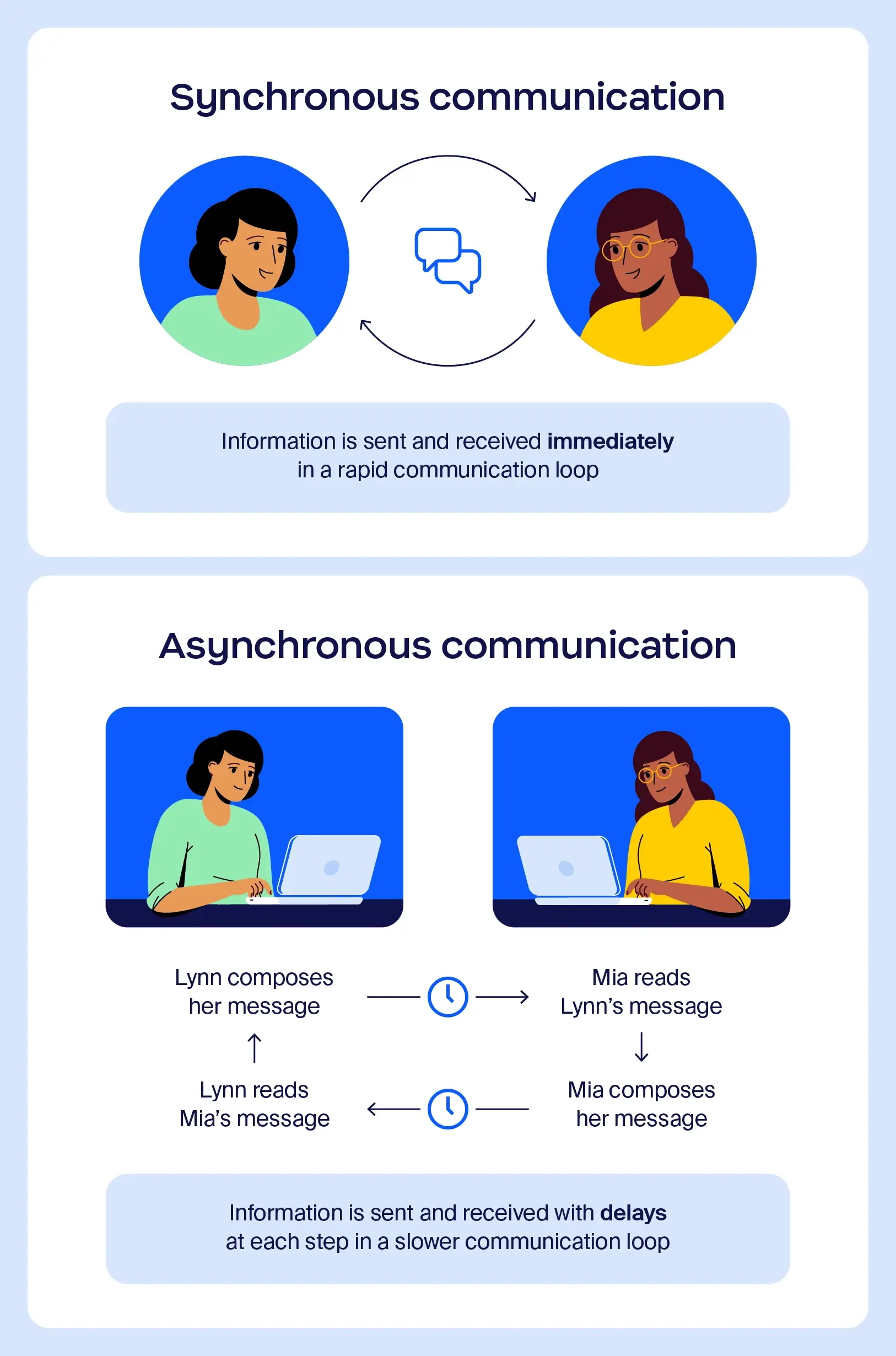
The difference between asynchronous and synchronous communication comes down to the level of interactivity and the timing.
Synchronous communication takes place live, with the senders and receivers of information engaging together in real time. On the other hand, asynchronous communication happens with a delay. Senders of information can communicate on their own time, and receivers can read and digest it as it’s convenient for them.
These differences mean that synchronous communication enables immediacy, spontaneity, and quick feedback loops. Asynchronous communication channels offer more room for deep thought and reflection, and don’t require calendar alignment.
What is synchronous communication?
Synchronous communication encompasses any mode of communication that requires participants to interact with each other in real time to convey information. It provides an easy back-and-forth, verbal cues, and immediate clarification or answers. Here are a few common synchronous communication examples:
- Virtual meetings: Virtual meetings, such as Zoom Meetings, offer video or audio gatherings so teams can discuss ideas in real time, from different locations. Participants can come together, present information, have discussions, ask and answer questions, and instantly respond to each other.
- Voice calls: Just like a traditional phone call, voice calling allows participants to hear and speak with one another, listen to individuals’ tone of voice and inflections, and have a live dialog from different locations. For example, Zoom VoIP Phone supports live conversations with others using the internet — no traditional phone line required.
- Webinars: A webinar is a live presentation or broadcast that often includes audience participation opportunities, like a Q&A session. Zoom Webinars enables presenters to share content, answer questions, and engage the audience in real time.
- In-person talks: In-person communication is also synchronous and may include team meetings, scheduled one-on-one sessions, or even informal hallway chats that happen on the fly.
There are numerous benefits to synchronous business communication. For example, personal interactions can generally help people build stronger rapport and work better together. Additionally, people are able to give and receive feedback immediately and resolve complex issues quickly. Synchronous communication can also be a better way of handling sensitive topics.
Drawbacks of synchronous communication, however, include:
- The possibility of interrupting time for focused work
- Dealing with scheduling conflicts
- Additional time investment required
Depending on the number of participants and the pace of interaction, there also may not be enough time or space for everyone to carefully consider information and formulate their thoughts.
What is asynchronous communication?
Asynchronous communication occurs when teams share information and interact with each other over time, often through writing, rather than having a real-time dialogue.
Participants can ask and answer questions or share feedback on their own time, which suits collaboration among global teams, distributed teams, flexible work schedules, or work that doesn’t necessitate immediate feedback. Asynchronous communication examples include:
- Chat software: Tools like Zoom Team Chat enable teams to message each other, create threads of information, and respond and react to others’ messages at their own pace.
- Emails: Email is a staple of the modern office, allowing teams to send messages to others and reply at their convenience. With tools like Zoom Mail and Calendar, you can use email to link to your calendar, enabling a mix of asynchronous and synchronous work.
- Project management systems: Many project tracking systems allow team members to assign and keep track of tasks with comments and status updates. This keeps everyone in the know without requiring all team members to be online at the same time.
- Cloud systems: Cloud-based tools enable team members to access documentation and make updates as needed at their own convenience. For example, with Zoom Docs, multiple people can contribute to documents and review changes, making it ideal for drafting, versioning, and documenting.
One of the main benefits of asynchronous communication is the high level of flexibility it offers. Team members can respond as they’re available, without feeling pressure to provide an immediate answer or rearrange their schedule. This works well for teams spanning a wide range of time zones or locations. It can also lead to more thoughtful, precise communication, given that people have time to construct their responses.
However, there are some drawbacks, including:
- Lack of personal connection and nuance — Without the benefit of body language or tone of voice, some meanings may get muddled
- Slower communication — This can lead to project delays and extended timelines
And while asynchronous communication tools are great for documentation, if you’re using too many systems, or even too many separate threads, information can get lost or duplicated.





 11 min read